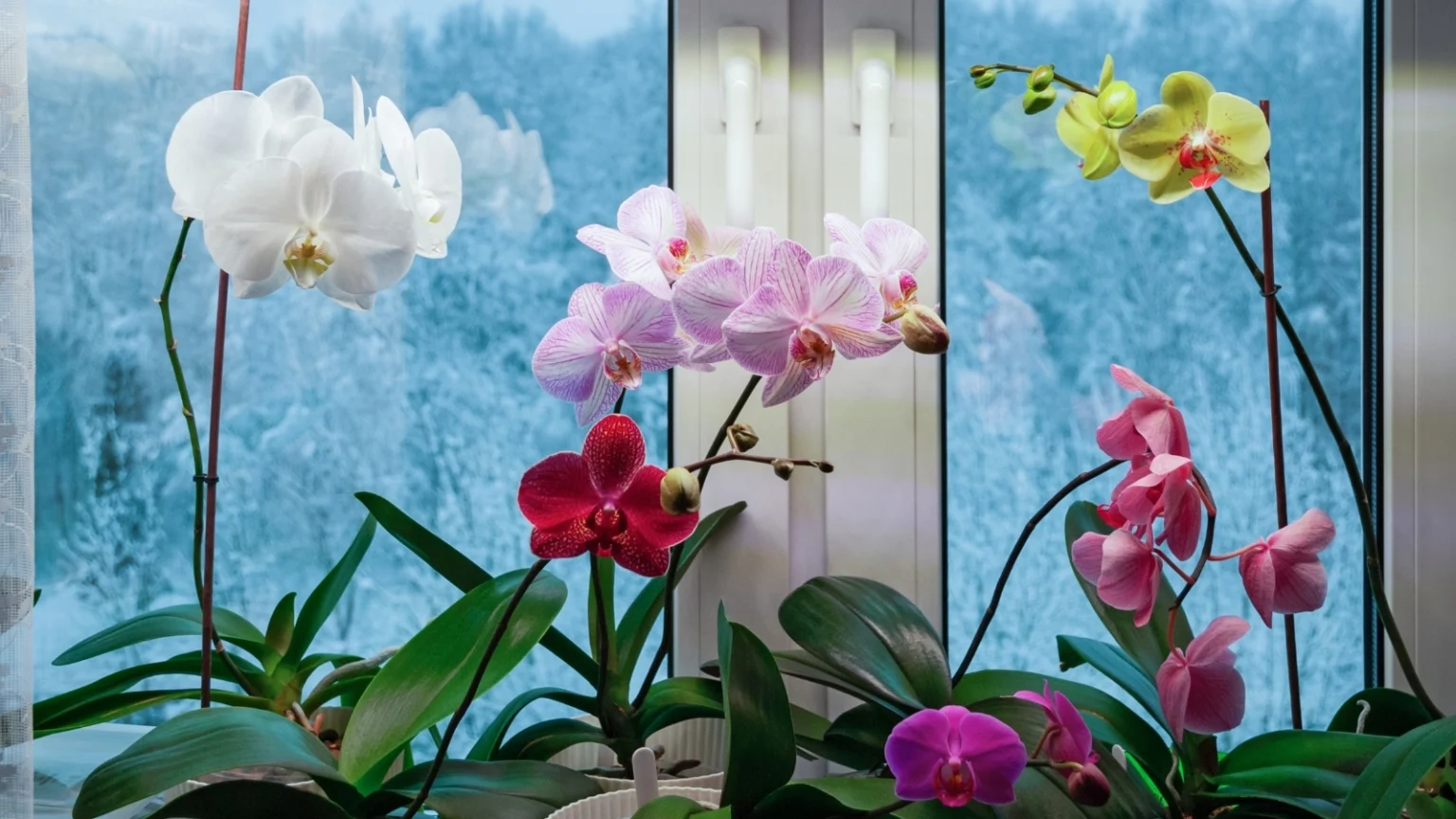
Orchids are some of the most popular yet elusive houseplants. Most of the ones we find at nurseries and other retailers are tropical and have environmental needs specific to those regions. If you’re caring for your orchids in a tropical zone, little needs to happen during winter. Otherwise, there are some important shifts to make.
Much of orchid winter care centers around identifying their natural habitat and mimicking those conditions. Some are native to high elevations. Their cold tolerance might surprise you! Others prefer the warm, humid conditions of a greenhouse year-round.
Let’s talk about some important factors in winter care. I will try to address the different species as much as possible when it comes to temperature and moisture needs. This is where the greatest differences lie. Let’s dig in.
I prefer to keep my plants outdoors during the summer because it solves the moisture and circulation conundrum that often leads to root rot. Fungus grows in cool, damp places, so indoors, it’s much more common. While I leave certain orchids outside for an extra month once the weather begins to cool off, others need to come in if there is even a threat of temperatures near 40°F (4°C).
Once they are indoors, they are not out of the weeds yet. For these and the orchids you keep indoors year-round, it’s important to pay attention to the temperature where you have them placed in the home. Sometimes, in very cold weather, the temperature near your windows can be significantly colder than your thermostat.
We typically think of orchids as warm-climate plants that thrive in hot weather and suffer when things get cool. The reality is that there are species that grow naturally as far north as Greenland and Alaska. It’s not common to keep many of these in the home, however. Most of the species you will find available for purchase are tropical natives.
Even among the more common types, there is a range of habitats and temperature tolerance as a result. The best way to determine the temperature range your particular plant can tolerate is to determine its native range. Then, find out the average highs and lows in that place.
The more common, cold-tolerant species include Cattleya, Cymbidium, Dendrocoyne Dendrobium, and Oncidium. These are all sympodial orchids; they form pseudobulbs and require a period of winter dormancy if you want them to bloom. Many of them naturally occur at higher elevations, where the air cools more than it does near sea level in the same regions.
Miltonia and Masdevilla orchids are also fairly tolerant of cool weather. You can leave all of these outdoors as the temperature begins to descend, at least for a period of time. This will send them into dormancy, or rest, to prepare for flowering. A few weeks of temperatures in the range of 60s (~16°C) during the day and 40s (~4°C) at night is what they need to initiate blooming. A decrease in daylight hours is often necessary, as well.